Small Apartment Cat Enrichment: How to Use Vertical Space
A practical guide to enriching a cat in a small apartment by using walls, windows, shelves, scratching zones, and low-effort routes.
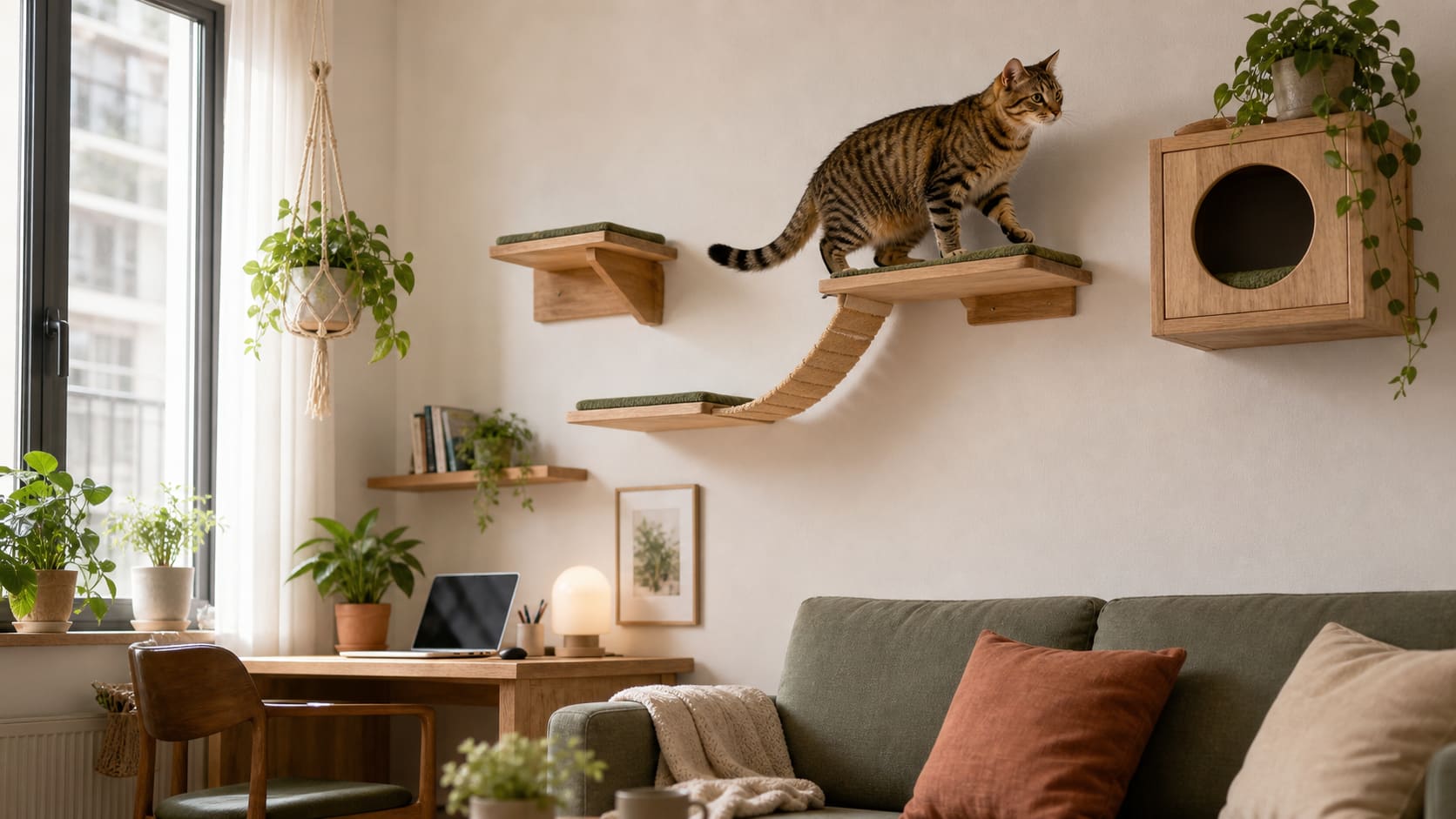
Small apartments do not have to be boring for cats. The problem is not square footage by itself. The problem is flat square footage.
Cats live in three dimensions. If the floor plan is small, the walls, windows, and furniture routes matter more. A good setup gives your cat places to climb, watch, scratch, hide, and retreat without turning your home into a toy store.
Start With One Vertical Route
Do not buy ten things. Build one route.
A route might go from a low stool to a shelf to a window perch. Or from a scratching post to a wall step to a resting condo. The point is sequence: climb, pause, observe, descend.
What helps: The Lynadri Cat Wall Shelves 5-in-1 is useful when you want several vertical functions in one wall setup: steps, a condo, a scratch area, and a post. That is the difference between “a shelf” and an actual enrichment route.
Put the Route Near Something Worth Watching
Height gets stronger near a window, social room, or favorite resting area. A shelf route to a blank wall is less useful than a shelf route to Cat TV.
If the window gets direct summer sun, add shade and make sure the resting zone does not overheat.
Use Scratching as Part of the Path
Small homes often have furniture scratching because the best stretch-and-mark spots are the sofa, rug, or bed frame. Add a scratching surface where the cat already passes, not hidden in a corner.
If you are fighting furniture damage, pair vertical upgrades with the steps in how to stop your cat from scratching furniture.
Add Food Work Without Adding Clutter
Puzzle feeding is perfect for apartments because it uses time instead of space. A treat ball, lick mat, or small doorway puzzle can turn one meal into a task.
For cats who like pawing and batting, a hanging treat toy can be useful as a short session, but test it while you are home first and inspect it regularly.
The 5-Zone Apartment Setup
Even in one room, try to give your cat:
- A high perch.
- A hiding or retreat spot.
- A scratching spot.
- A window view.
- A food puzzle or foraging area.
That is the small-apartment version of territory. It gives your cat more choices without needing more floor.
What To Avoid
Avoid shelves that are too high with no easy way down, slippery surfaces, wobbly furniture, and routes over breakable items. Also avoid filling the apartment with toys that stay out forever. Cats habituate fast; rotation beats clutter.
Small-space enrichment is not about making your home bigger. It is about making the space richer.
Sources
This article cites 3 sources in the text. They are linked below.
- Feline Environmental Needs (Ohio State University Indoor Pet Initiative)
- What Your Cat Needs to Feel Secure (Cat Friendly Homes)
- Feline Environmental Needs and Enrichment (MSPCA-Angell)
Common questions
Can a cat be happy in a small apartment?
Yes, if the apartment is designed well. Cats need territory, choices, hiding, scratching, play, food work, and vertical routes more than they need a huge floor plan.
What is the best enrichment for a small apartment?
Vertical space is usually the highest-impact change because it adds usable territory without taking floor space.
Do I need wall shelves?
Not always. A window perch, cleared bookshelf, sturdy cat tree, or safe cabinet route can help. Wall shelves are useful when floor space is limited.
The Indoor Cat Enrichment Starter Plan
A simple download with play, food puzzle, and routine ideas you can use this week.
No spam. Unsubscribe anytime. We respect your inbox.