Cat Wall Shelves vs Cat Trees: Which Is Better for Indoor Cats?
Cat wall shelves and cat trees solve different enrichment problems. Here is how to choose the better vertical-space setup for your home and your cat.
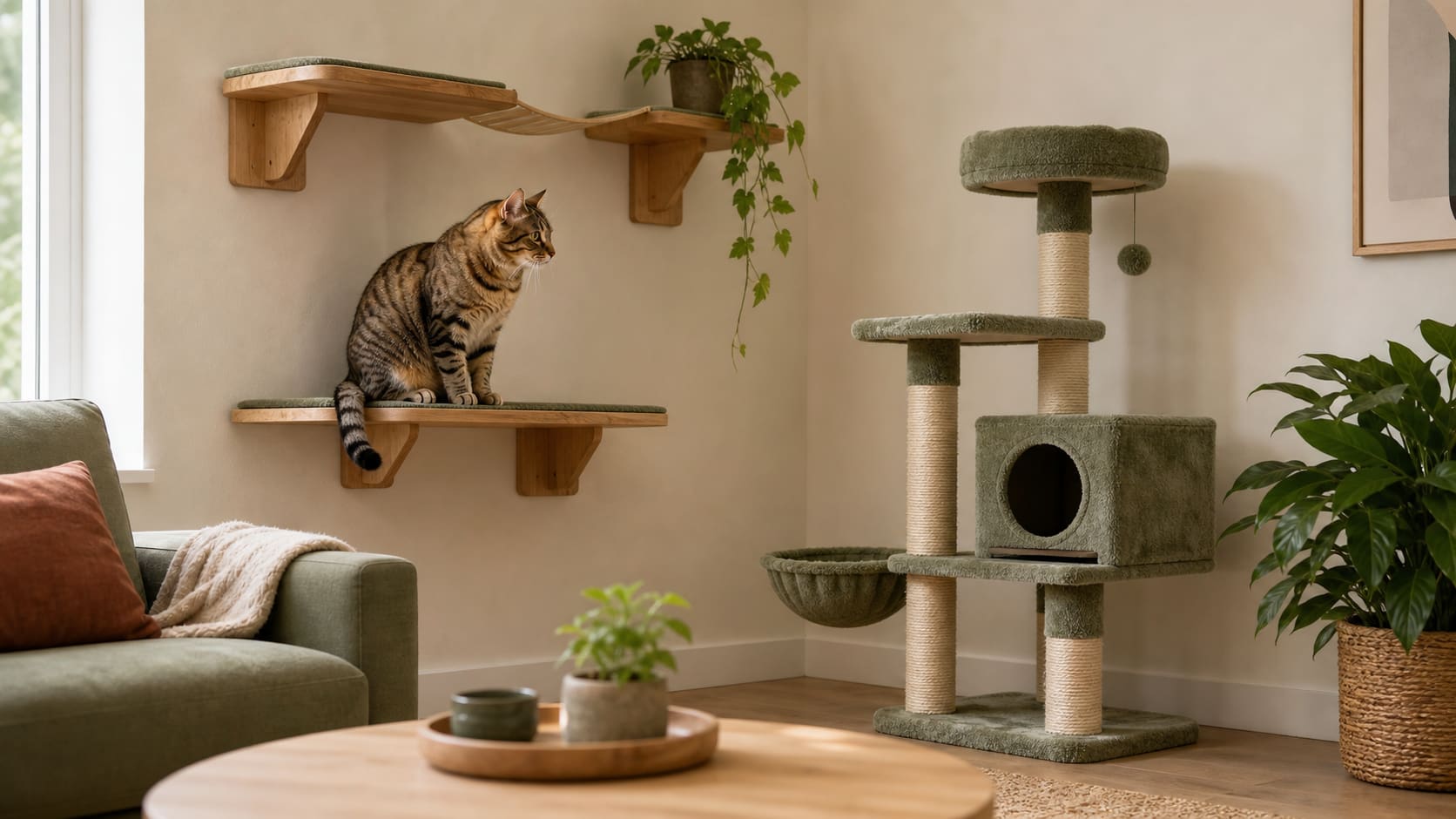
Vertical space is one of the most underrated upgrades for indoor cats. It changes the room without changing the room. A cat who can climb, watch, scratch, and rest above floor level has more territory, more choices, and fewer reasons to turn your counters into a playground.
The question is not whether height helps. It is which kind of height fits your cat and your home: a cat tree or wall shelves.
Cat Trees Are Better When You Need Simple
A cat tree is the easiest vertical upgrade. You unpack it, place it near a window or social room, and your cat gets platforms, scratching posts, and resting spots without drilling into the wall.
Choose a cat tree if you rent, move often, want something reversible, or have a cat who prefers a familiar central tower.
The downside is floor space. In small apartments, a cat tree can dominate the room and still offer only one vertical column.
Wall Shelves Are Better When Space Is Tight
Wall shelves use territory you were not using anyway. That makes them especially strong for apartments, narrow rooms, and cats who like routes rather than one tower.
The best wall setup has more than one function: steps to climb, a resting spot, scratching texture, and a way to get down safely. A single high shelf is less useful than a route.
What helps: The Lynadri Cat Wall Shelves 5-in-1 fits the route idea because it combines steps, a condo, a scratch area, and a post. That gives a cat several things to do, not just one perch to sit on.
Choose by Cat Personality
Pick a cat tree for cats who love scratching posts, enclosed cubbies, and predictable central spots.
Pick wall shelves for cats who climb furniture, patrol windowsills, jump between surfaces, or get bored in small rooms.
For senior cats or cats with mobility issues, keep routes low, wide, and easy. Height should create confidence, not risk.
The Best Setup Is Often Both
If you have space, pair a tree with shelves. The tree becomes the base, and shelves extend the route toward a window or quiet resting zone. This turns one object into a mini territory.
For more broad setup ideas, read 20 indoor cat enrichment ideas and Cat TV window perch setups.
Safety Rules
Whatever you choose:
- Keep jumps reasonable.
- Avoid slick landing surfaces.
- Place routes away from fragile shelves.
- Mount wall pieces securely.
- Give cats an easy way down.
Vertical space works because it gives a cat control. Build it like a route, not a decoration.
Sources
This article cites 3 sources in the text. They are linked below.
- Feline Environmental Needs (Ohio State University Indoor Pet Initiative)
- What Your Cat Needs to Feel Secure (Cat Friendly Homes)
- Meeting the Physical and Emotional Needs of Indoor Cats (FelineVMA)
Common questions
Are cat wall shelves better than cat trees?
They are better when floor space is limited or your cat likes routes, height, and lookout points. Cat trees are better when you want a movable, all-in-one option without wall mounting.
Do indoor cats need vertical space?
Most indoor cats benefit from height because it gives them observation, security, climbing, and more usable territory without needing a larger home.
Are wall shelves safe for cats?
They can be safe when mounted correctly into appropriate supports and matched to your cat's size and mobility. If you are unsure about installation, get help.
The Indoor Cat Enrichment Starter Plan
A simple download with play, food puzzle, and routine ideas you can use this week.
No spam. Unsubscribe anytime. We respect your inbox.