Leaving Your Cat Home Alone on Summer Vacation: The Full Guide
How long can you really leave a cat alone, and what's the safe setup for summer travel? A practical guide to feeders, water, sitters, and heat-proofing your home while you're away.
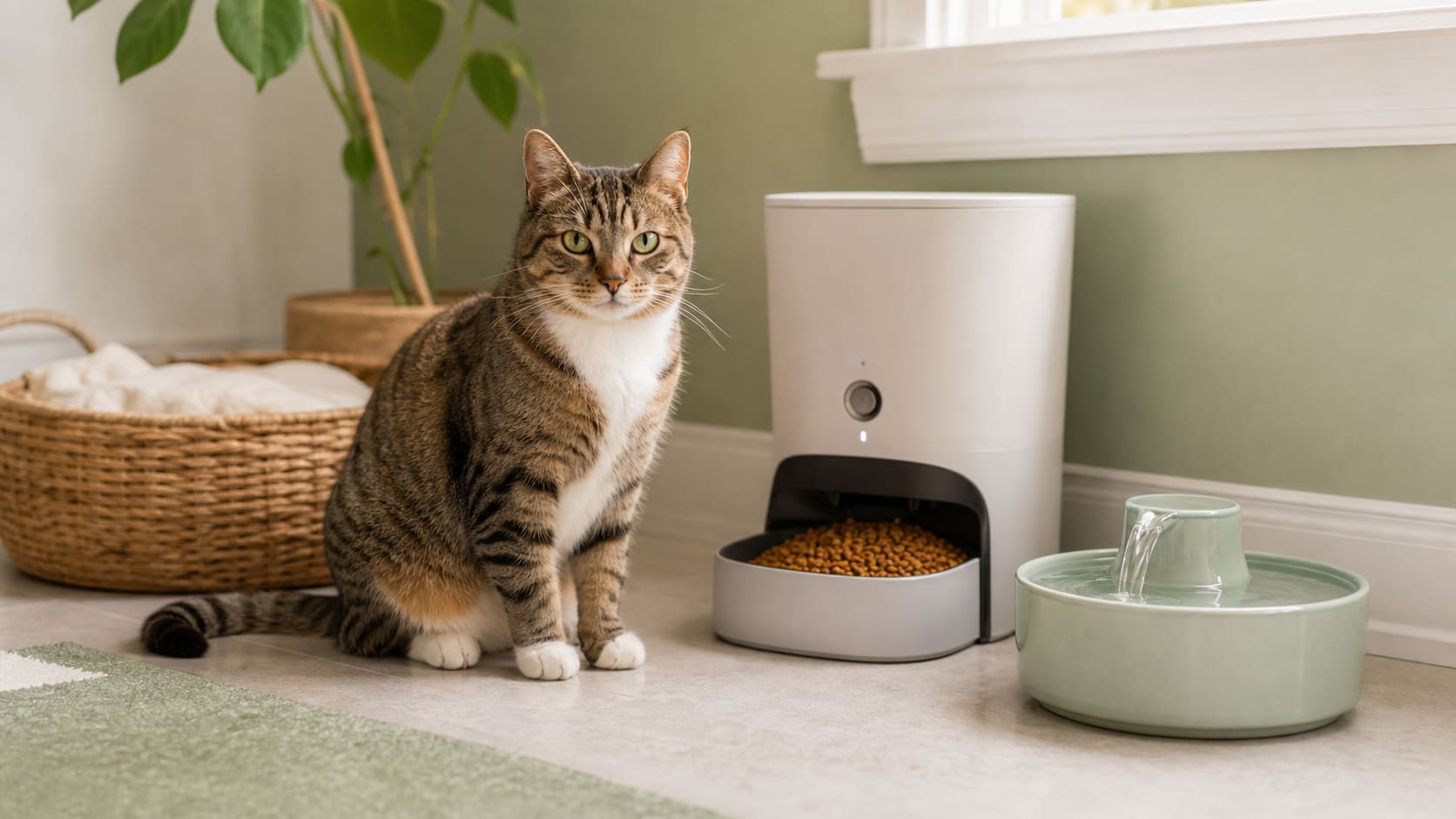
Summer is peak travel season, which means a lot of cats are about to spend some time home alone. Cats are more independent than dogs, and that leads to a common, risky assumption: that you can top up the food and water, head off for a week, and they will be fine. They will not. There is a real difference between a cat that is self-sufficient for a day and a cat that is safe for a week, and the gap is exactly where things go wrong. Here is how to set up genuinely safe summer travel.
How Long Is Too Long?
The honest answer is shorter than most people hope:
- Up to ~24 hours: A healthy adult cat is fine alone with fresh food, water, and a clean litter box.
- 2 to 3 days: Possible, but only with someone checking in at least once a day.
- A week or more: Requires daily in-person care, full stop. No amount of automation covers a week of being alone.
Kittens, senior cats, and any cat with a medical condition need daily eyes on them no matter how short the trip.
Why a Feeder Alone Isn’t a Plan
Gadgets solve the easy problems and none of the hard ones. An automatic feeder handles meals; it does not notice that your cat stopped eating because they are unwell. A fountain provides water until it tips over, runs dry, or fails. A litter box stays usable for a day or two, then becomes something a fastidious cat will refuse to use, leading to accidents and stress.
The things that actually go wrong on a trip — illness, injury, a knocked-over water source, a blocked feeder, or pure loneliness in a sensitive cat — all need a human. Automation is a helpful layer, not the whole plan.
The Smart Setup: Automation Plus a Human
The best approach pairs reliable equipment with a daily visitor.
Automate the food. A programmable feeder keeps meals on schedule so your cat is not gorging or starving around a sitter’s timing. A PetSafe Healthy Pet Simply Feed dispenses portioned meals at set times and holds enough for a long weekend, which also keeps routine-driven cats calmer.
Secure the water. Put out more than one water source so a single failure is not a crisis. A fountain keeps water fresh and appealing — important in summer when intake matters more — and a backup bowl or two covers you if it stops. Our hydration guide has more on keeping a cat drinking.
For a short trip or a multi-pet home, capacity and placement matter as much as the fountain itself. A small fountain in the wrong corner can still go unused, and a single water source is never enough if you are away.
What helps: The Pokpet 10L Stainless Cordless Fountain is useful when your main problem is a larger shared water station. A 10L capacity, stainless basin, motion sensing, Type-C charging, and cordless placement make it easier to keep the station somewhere useful instead of wherever the nearest outlet happens to be. It does not replace a sitter or a backup bowl, but it can make the primary water station more resilient for a weekend or hot spell.
If your cat is alone for more than a day, ask the sitter to check the water station at every visit: confirm the water level, rinse anything slimy, verify the fountain is still running, and refresh the backup bowls. The safest travel setup is not “one big gadget.” It is a main water station plus redundancy plus human eyes.
Add eyes on the home. A pet camera, some with treat-dispensing, lets you check in, confirm your cat is eating and moving normally, and even say hello. It will not replace a sitter, but it turns “I hope they’re okay” into “I can see they’re okay.”
Arrange a real human. For anything past two days, book a trusted sitter or ask a reliable friend to visit daily — to scoop litter, refresh water, top up food, and simply lay eyes on your cat. Leave your vet’s details and an emergency contact.
Heat-Proof the House Before You Go
Summer adds a layer most travel checklists miss: the house itself can get dangerously hot while you are away.
- Guarantee a cool room. Keep a shaded, well-ventilated room accessible, and never leave your cat shut in a space that bakes in afternoon sun.
- Set blinds and airflow so the home does not turn into a greenhouse on a hot day.
- Multiple water stations, kept out of any sun.
- Ask your sitter to watch for heat — see the signs of heatstroke — during a heatwave.
Keep Their Routine Familiar
Cats bond to territory far more than to places, which is why most are calmer at home than in a boarding facility. Keep things normal: same food, same feeding times, familiar bedding with your scent, and their usual toys out. A little enrichment helps a bored, alone cat — the same ideas from keeping your cat entertained while you’re at work apply to vacation days too.
Set up properly, a week away does not have to mean a stressed or at-risk cat. Automate what you can, enlist a human for the rest, and heat-proof the home — then actually enjoy your trip.
We’re building CatPlay, a simple app for tracking your cat’s daily eating, drinking, and activity — so a sitter (or you, remotely) can tell at a glance whether everything’s normal.
Sources
This article cites 3 sources in the text. They are linked below.
- Travel and Boarding Care for Cats (ASPCA)
- Leaving Your Cat at Home (International Cat Care)
- Feline Stress and Environment (The Ohio State University)
Common questions
How long can you leave a cat alone?
A healthy adult cat can be left for about 24 hours with fresh food, water, and a clean litter box. Beyond a day, you need someone to check in daily. Two or three days with no human contact is the realistic maximum even for independent cats, and many do better with a daily visitor.
Can I leave my cat alone for a week with an automatic feeder?
No. An automatic feeder and water fountain solve food and water, but not a sudden illness, a tipped-over fountain, a litter box that needs cleaning, or simple loneliness. For a week away, arrange a pet sitter or daily visitor, even if the feeding is automated.
Is it better to board a cat or leave it at home?
Most cats are far less stressed in their own home than in a boarding facility, since cats bond strongly to territory. A trusted sitter visiting your home is usually the gentlest option. Boarding can make sense for cats with medical needs or when no reliable in-home care is available.
The Summer Cat Care Checklist
A simple checklist for heat, hydration, grooming, and open-window safety on hot days.
No spam. Unsubscribe anytime. We respect your inbox.