Why Indoor Cats Get Bored in Summer and What to Change First
Summer boredom in indoor cats is real: heat changes play, windows get risky, routines shift, and cats need calmer outlets. Here is what to fix first.
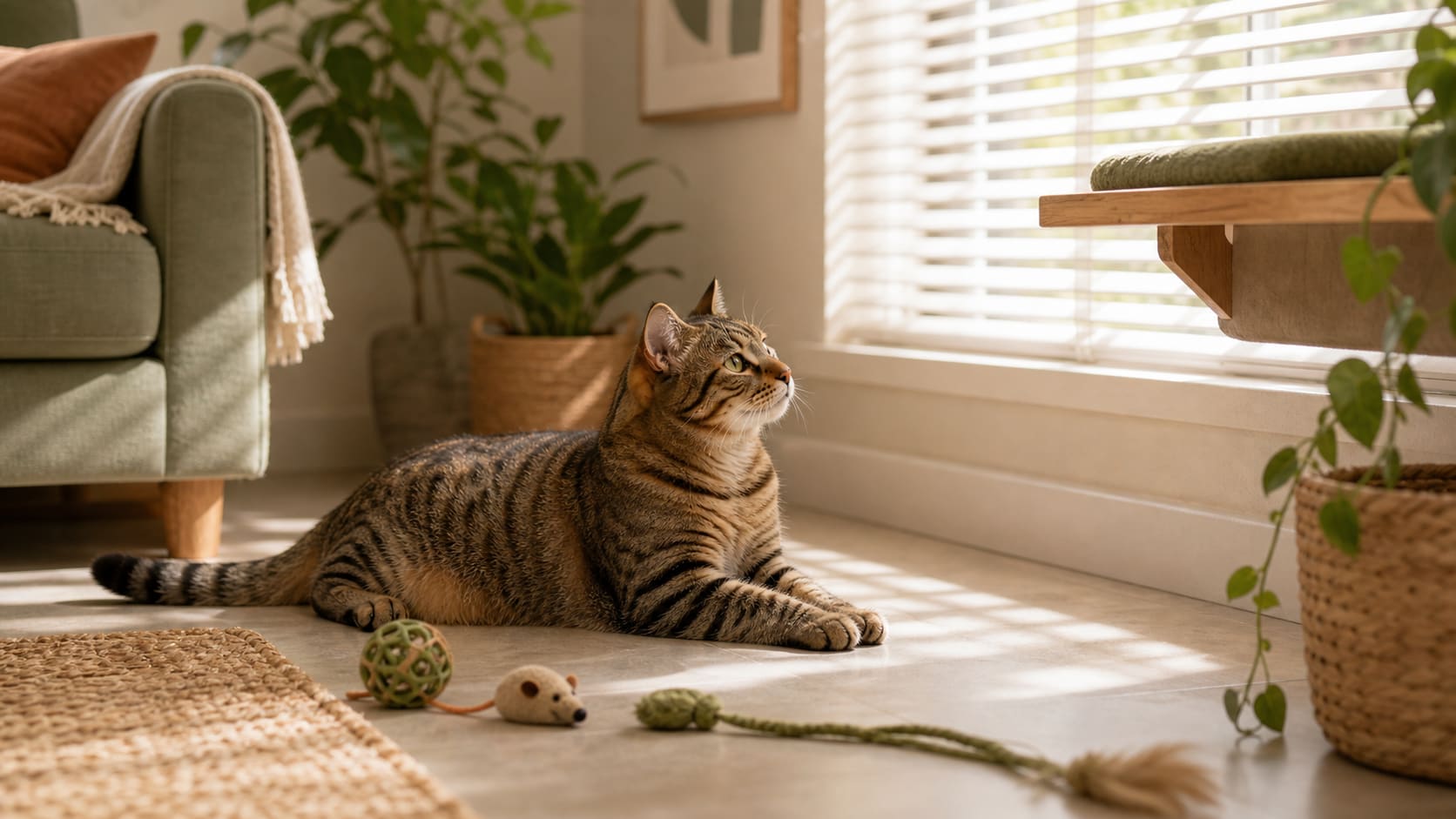
Summer boredom looks different from winter boredom.
In winter, an indoor cat may need more movement. In summer, the problem is often that hard movement is less comfortable, windows are managed differently, owners travel, and the day gets flatter. A cat still needs hunting, watching, scratching, and problem-solving. The outlets just need to change.
What Changes in Summer
Hot rooms make chase play less appealing. Blinds may stay closed. Balcony or window access may be restricted for safety. Owners go away more often. Food and water routines shift.
The result is a cat who sleeps more, then explodes at inconvenient times because the day offered nothing satisfying.
Change the Timing First
Move active play to cooler parts of the day. Morning and evening are better for wand play. Midday is better for scent work, food puzzles, window watching from shade, or calm vertical territory.
For hot-day ideas, read summer enrichment for indoor cats.
Add Vertical Territory
Height gives cats something to do without forcing speed. Climbing, watching, scratching, and resting are all enrichment.
What helps: The Lynadri Cat Wall Shelves 5-in-1 works as a wall route with steps, a condo, scratch area, and post. That makes it a good small-space summer upgrade when floor play is too intense.
Use Food Work Instead of More Toys
If your cat ignores toys in the heat, use food puzzles. A short treat hunt, lick mat, or dispenser lets your cat solve without sprinting.
What helps: The NHCASURUE Hanging Door-Frame Treat Dispenser is a short supervised hunting puzzle for cats who like pawing and movement. Use it before boredom peaks, not after your cat is already frantic.
Watch for Non-Boredom Causes
Summer can also bring fleas, heat stress, dehydration, skin irritation, and disrupted routines. If your cat is suddenly hiding, panting, overgrooming, refusing food, vomiting, or acting weak, do not label it boredom.
Behavior tells you something changed. It does not tell you the cause by itself.
What To Change First This Week
Try this for seven days:
- Morning: 10 minutes of play before breakfast.
- Midday: shaded water, food puzzle, or cool resting route.
- Evening: second short play session.
- Weekly: rotate toys and move one piece of enrichment.
That is enough to learn whether summer boredom is the pattern. If it helps, build from there. If it does not, look harder at health, stress, and the home setup.
Sources
This article cites 3 sources in the text. They are linked below.
- Feline Environmental Needs (Ohio State University Indoor Pet Initiative)
- Feline Environmental Needs and Enrichment (MSPCA-Angell)
- Keeping Cats Safe in Hot Weather (International Cat Care)
Common questions
Do cats get bored more in summer?
They can. Heat can reduce active play, owners travel more, windows and balconies may become restricted, and routines change. That can leave indoor cats with fewer outlets.
What should I change first?
Change the time and type of enrichment: active play in cooler morning/evening windows, calmer food work and vertical watching during hot afternoons.
Is destructive behavior in summer always boredom?
No. Heat stress, pain, anxiety, fleas, and medical issues can also change behavior. Sudden or severe changes deserve a vet check.
The Summer Cat Care Checklist
A simple checklist for heat, hydration, grooming, and open-window safety on hot days.
No spam. Unsubscribe anytime. We respect your inbox.