Heatstroke in Cats: The Warning Signs and What to Do Fast
Heatstroke in cats can turn serious in minutes. Learn the early warning signs, the emergency steps that buy time, and how to cool a cat down safely on the way to the vet.
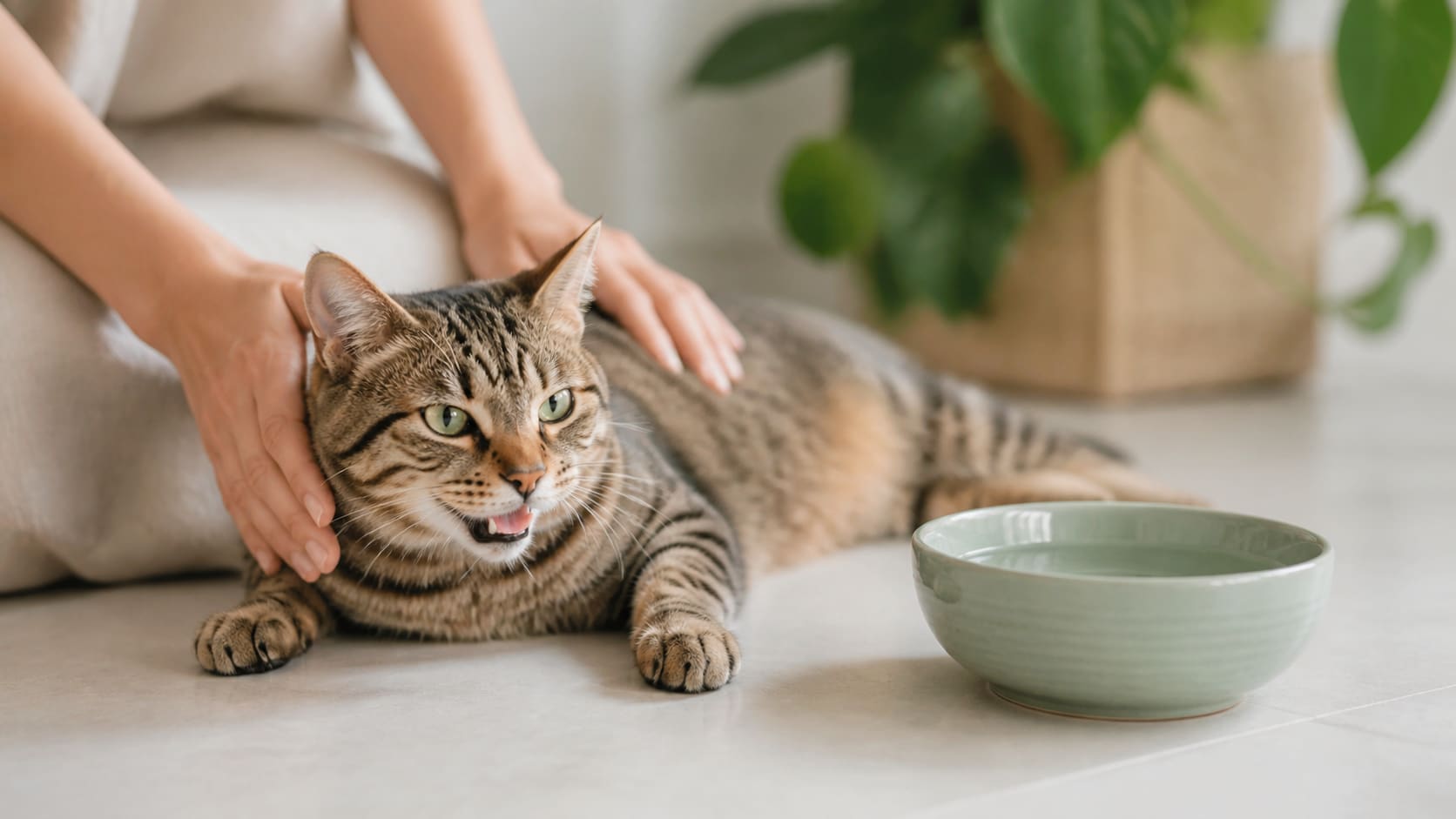
Heatstroke is the summer emergency most cat owners do not see coming, because cats are quiet about distress. A dog in trouble pants loudly and looks panicked. A cat in trouble goes still, breathes with its mouth open, and finds the coldest floor in the house. To an untrained eye it can look like a cat just being lazy in the heat. It is not. Open-mouth breathing in a cat is a red flag, and from there things can move fast.
This is the article to read before you need it, so the steps are already in your head if the day comes.
Why Cats Are So Vulnerable to Heat
Cats evolved from desert animals, which fools people into thinking they handle heat well. They handle dry heat by resting and conserving energy, but they have almost no ability to shed heat quickly. They do not sweat except through their paw pads, and panting is a last-resort cooling method for a cat, not an everyday one like it is for a dog.
That combination means a cat can go from coping to overwhelmed in a short window, especially in humidity, which blocks what little evaporative cooling they have.
The Warning Signs, in Order
Heatstroke is a progression. Catching it at the top of this list is what keeps it from reaching the bottom.
Early:
- Panting or open-mouth breathing
- Restlessness, pacing, or trouble settling
- Seeking out cold surfaces (tile, sink, tub)
- Grooming excessively to spread cooling saliva
Worsening:
- Drooling, sometimes thick or sticky
- Bright red or dark gums and tongue
- Lethargy, weakness, reluctance to move
- Rapid heartbeat and fast, shallow breathing
Emergency:
- Vomiting or diarrhea
- Stumbling, disorientation, or collapse
- Tremors or seizures
- Gums turning pale or bluish
If you are seeing anything in the “worsening” or “emergency” groups, you are past prevention and into first aid plus an immediate vet trip.
What to Do Right Now
The goal is to cool your cat gradually while you arrange veterinary care. Cooling too aggressively can cause its own problems, so the method matters.
- Move them somewhere cool and shaded immediately. A tiled room, in front of a fan, out of any direct sun.
- Offer water, but do not force it. Let them drink if they will. Never pour water into the mouth of a wobbly or unresponsive cat.
- Wet the fur with cool — not ice-cold — water. Use a damp cloth or your hands on the paw pads, belly, ears, and armpits. Ice-cold water makes surface blood vessels clamp shut and can trap heat inside. Cool and steady wins.
- Add airflow. A fan over the damp fur dramatically speeds safe cooling through evaporation.
- Call your vet as you go. Tell them you are coming in with a suspected heatstroke. This is a same-hour emergency, not a wait-and-see.
Stop active cooling once your cat seems more comfortable and is breathing more normally — over-cooling on the way to the clinic is a real risk. The vet still needs to check them even if they rally, because the dangerous damage from heatstroke happens on the inside.
The Cats at Highest Risk
Some cats cross from hot to heatstroke far sooner, and deserve extra watching on a hot day:
- Flat-faced breeds (Persians, Himalayans, Exotics) — their airways make panting inefficient.
- Kittens and senior cats — weaker temperature regulation.
- Overweight cats — extra insulation, less efficient cooling.
- Long-haired cats — a dense coat traps heat.
- Cats with heart, lung, or kidney conditions — less reserve to cope.
If your cat is in any of these groups, the prevention steps below are not optional in a heatwave.
Preventing It in the First Place
Almost all feline heatstroke is preventable with a few habits:
- Guarantee a cool retreat your cat can always reach — a tiled floor or a cooling mat in their favorite spot.
- Keep water cold and everywhere. A fountain encourages the steady drinking that prevents dehydration. Our full guide on getting your cat to drink more water has more.
- Never confine a cat in a hot space. No parked cars, ever, and no sunrooms or carriers left in the sun.
- Close blinds early and run airflow before the house heats up.
For the complete warm-weather routine, see how to keep your cat cool in hot weather. The single most useful thing you can do today, though, is simply to learn what open-mouth breathing in a cat means, because the owners who catch it early are the ones who never end up in the emergency room.
This article is general information, not veterinary advice. If you suspect heatstroke, contact your vet or an emergency clinic right away. We’re also building CatPlay, a simple app for logging your cat’s daily habits so you notice changes early.
Sources
This article cites 3 sources in the text. They are linked below.
- Heatstroke in Cats (Cornell Feline Health Center)
- Hot Weather Safety Tips (ASPCA)
- Heatstroke in Cats — Recognising and Preventing It (International Cat Care)
Common questions
What are the first signs of heatstroke in a cat?
The earliest signs are panting or open-mouth breathing, restlessness, and seeking out cool surfaces. As it progresses you may see drooling, bright red gums and tongue, lethargy, vomiting, and unsteadiness. Open-mouth breathing in a cat is never normal and should be treated as an early warning.
What temperature is a heatstroke emergency for cats?
A cat's normal body temperature is about 100.5 to 102.5 degrees Fahrenheit. A body temperature above roughly 104 degrees is dangerous, and above 106 can cause organ damage. Because you usually cannot measure this at home in the moment, treat the behavioral warning signs as the emergency trigger.
Can a cat recover from heatstroke on its own?
Do not count on it. Mild overheating may resolve with cooling, but true heatstroke damages organs in ways that are not visible from the outside and can worsen for hours. Any cat showing heatstroke signs needs to be seen by a vet, even if it seems to improve after cooling.
The Summer Cat Care Checklist
A simple checklist for heat, hydration, grooming, and open-window safety on hot days.
No spam. Unsubscribe anytime. We respect your inbox.