How to Get Rid of Fleas on Cats — and Keep Them Off All Summer
Fleas peak in summer and a few quickly become an infestation. Here's how to get rid of fleas on cats safely, treat your home so they don't come back, and the dangerous mistake to avoid.
Fleas are a summer problem because fleas love what summer offers: warmth and humidity. A single female flea lays up to fifty eggs a day, and most of an infestation — the eggs, larvae, and pupae — is not on your cat at all but tucked into your carpet, bedding, and floor cracks. That is why fleas feel impossible to beat if you only treat the cat. Win the summer flea fight by treating the cat and the environment at the same time, and by avoiding one dangerous mistake.
First, Confirm It’s Actually Fleas
Before you treat, make sure fleas are the cause. The giveaway is flea dirt — the digested blood fleas leave behind, which looks like fine black pepper in the fur, especially around the tail base and neck.
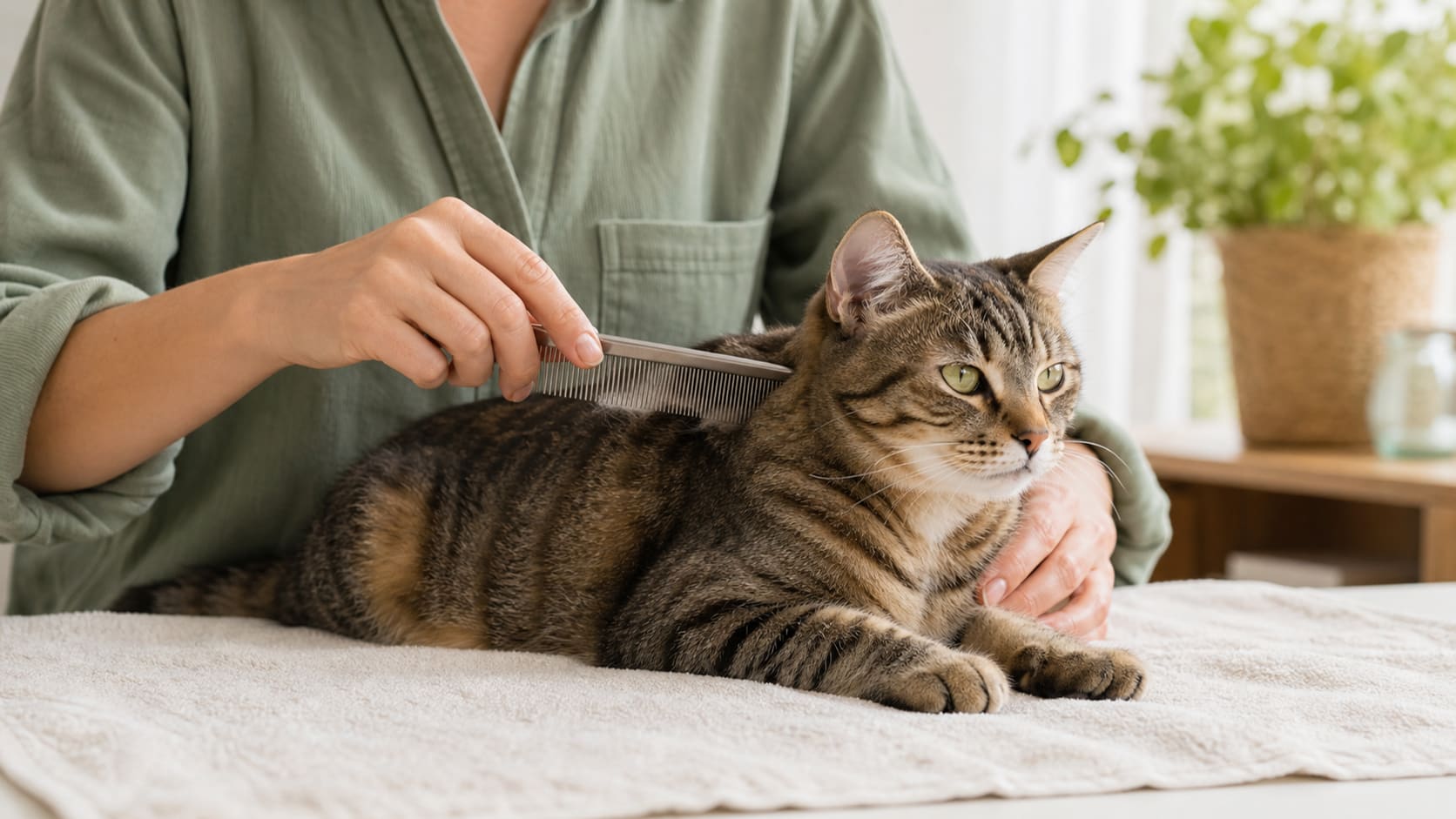
The reliable home test: comb your cat over a damp white paper towel and collect the specks. If they smear reddish-brown, that is flea dirt, and you have your answer even if you never see a live flea. A fine-toothed flea comb is the right tool for this, and it pulls live fleas and dirt out of the coat at the same time.
The Safe Way to Get Rid of Them
Getting rid of fleas is a three-front job. Skip any one of these and they come back.
1. Treat the cat with a vet-approved product
This is the heart of it, and the part to get right. Modern vet-recommended flea preventatives are by far the most effective and safest option — they break the flea life cycle in a way that combs and sprays cannot. Talk to your vet about the right product for your cat’s age and weight, and follow the dosing exactly.
⚠️ The mistake that kills cats: Never use a flea product made for dogs on a cat. Many contain permethrin, which is highly toxic to cats and can be fatal. Don’t let your cat groom a dog that’s just been treated, either. Only ever use products labeled for cats, and when in doubt, ask your vet first.
Be skeptical of cheap “natural” spot-ons and ultrasonic flea collars — many are ineffective at best, and some essential-oil products are themselves toxic to cats.
2. Comb daily to clear the live fleas
While the preventative does its work, a flea comb gives immediate relief and lets you track progress. Comb over a bowl of soapy water and dunk what you catch — fleas can jump back out of plain water. Daily combing also removes flea dirt that would otherwise irritate the skin. It is the gentlest tool there is, which makes it ideal for kittens too young for chemical treatments, under vet guidance.
3. Treat the home, where most of the fleas live
Because the majority of an infestation is in the environment, the cat treatment alone will not finish the job:
- Wash all bedding — your cat’s and yours — in hot water.
- Vacuum thoroughly and often, especially carpet edges, under furniture, and floor cracks. The vibration even coaxes pupae to hatch so the treatment reaches them. Empty the vacuum outside afterward.
- Stay consistent for several weeks. Flea pupae can lie dormant and hatch later, so a single clean-up rarely ends it. Keep treating and vacuuming through the full life cycle.
Why Summer Makes It Worse — and How to Stay Ahead
Heat and humidity speed up the flea life cycle dramatically, so an infestation snowballs faster in July than it ever would in January. The flip side is that prevention is much easier than eradication.
- Keep year-round prevention going if your vet recommends it — even indoor cats, since fleas come in on us.
- Comb weekly as an early-warning system, so you catch two fleas before they become two hundred.
- Treat every pet in the home. Fleas move between animals, so one untreated pet keeps the cycle alive for everyone.
Fleas are also worth catching early because heavy scratching and over-grooming look a lot like other summer skin issues. If your cat is losing fur and you have ruled out fleas, it may simply be the season — see why your cat sheds so much in summer. And for the rest of the warm-weather care picture, how to keep your cat cool in hot weather covers what else changes once the temperature climbs.
This article is general information, not veterinary advice. Flea products and dosing should be confirmed with your vet, especially for kittens, seniors, or cats with health conditions. We’re also building CatPlay, a simple app for logging your cat’s daily habits so you spot scratching and coat changes early.
Sources
This article cites 3 sources in the text. They are linked below.
- Fleas and Your Cat (Cornell Feline Health Center)
- Fleas — Prevention and Control (International Cat Care)
- Flea and Tick Safety (ASPCA)
Common questions
How do I know if my cat has fleas?
Look for frequent scratching, biting at the base of the tail, tiny dark specks in the fur (flea dirt), and scabby skin. Comb your cat over a damp white paper towel — if the specks you collect turn reddish-brown when wet, that's digested blood, which confirms fleas even when you can't spot the fleas themselves.
Can indoor cats get fleas?
Yes. Fleas hitch in on your clothes and shoes, on other pets, and through windows and doors, and they thrive in the warm, humid conditions of summer. Indoor-only cats can absolutely get them, which is why many vets recommend year-round prevention even for cats that never go outside.
Are dog flea products safe for cats?
No — and this is critical. Many dog flea products contain permethrin, which is highly toxic and potentially fatal to cats. Never use a dog product on a cat or let a cat groom a recently treated dog. Only use flea products labeled specifically for cats, and check with your vet first.
The Summer Cat Care Checklist
A simple checklist for heat, hydration, grooming, and open-window safety on hot days.
No spam. Unsubscribe anytime. We respect your inbox.