How Much Water Should a Cat Drink in Hot Weather?
A practical summer hydration guide for cats: what normal drinking looks like, when to worry, and how to set up water stations without panic.
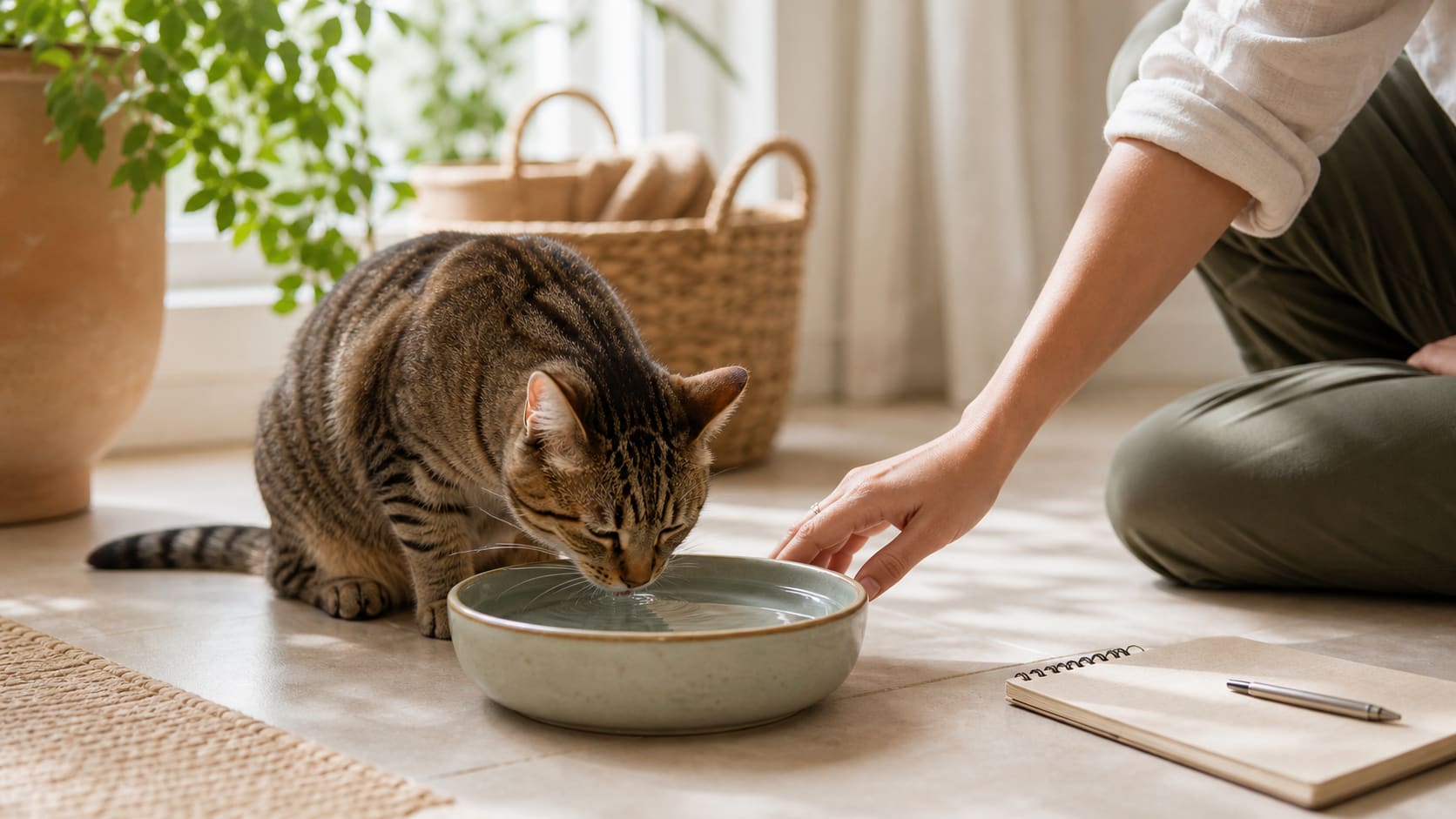
The hard part about cat hydration is that cats do not make it obvious. Some drink from the bowl in front of you. Others get most of their moisture from wet food, sneak drinks at night, or seem to drink almost nothing until you move the bowl.
In hot weather, the goal is not obsessing over a perfect number. The goal is noticing change and building a water setup that makes normal drinking easier.
Watch Patterns, Not Just Ounces
If your cat eats mostly wet food, they may drink less from bowls because the food already contains moisture. If they eat mostly dry food, you may see more visible drinking. Both patterns can be normal.
What matters is change: suddenly drinking much more, suddenly drinking much less, urinating more, straining, hiding, vomiting, or acting weak. Those are vet-call signals.
Summer Raises the Stakes
Heat does not automatically mean dehydration, but it makes small problems matter more. Warm rooms, stale bowls, direct sun, and a single water source can all reduce drinking right when water matters most.
Start with the basics:
- Put water in more than one room.
- Keep it away from food and litter.
- Refresh bowls before the hottest part of the day.
- Add wet food if your cat tolerates it.
- Keep rooms shaded and cool.
Then decide whether a fountain solves a real problem.
When a Fountain Helps
A fountain is useful when water needs to be more visible, more interesting, or easier to place away from the food bowl. It is not a medical device and it should not be framed as one.
What helps: The PETALPAW Wireless Cat Water Fountain is useful when the best drinking spot is not near an outlet. A cordless setup, stainless-steel drinking surface, visible water window, and multiple flow modes make placement tests easier.
For homes where one station gets heavy use, the Pokpet 10L Stainless Cordless Fountain is the higher-capacity option. Its large reservoir, stainless basin, motion sensing, and cordless placement fit multi-pet homes and summer backup planning.
The Litter Box Tells You a Lot
Hydration is not only about watching the bowl. Watch the litter box. Fewer clumps than usual, very small clumps, straining, crying, repeated trips, or no urine are more important than whether the water line dropped overnight.
If litter box output changes suddenly, do not wait for a fountain to fix it.
A Calm Summer Water Checklist
Use this before heatwaves and travel days:
- Main water source cleaned and filled.
- Backup bowl in another room.
- Water away from food and litter.
- Wet food or water-rich topper available if your cat tolerates it.
- Sitter instructions if you are away.
- Vet contact saved where a sitter can find it.
For cooling beyond hydration, read how to keep your cat cool in hot weather. Water matters, but it works alongside shade, cool surfaces, airflow, and watching your cat’s normal behavior.
Sources
This article cites 3 sources in the text. They are linked below.
- Keeping Cats Safe in Hot Weather (International Cat Care)
- Hot Weather Safety Tips (ASPCA)
- Cornell Feline Health Center (Cornell University College of Veterinary Medicine)
Common questions
Do cats drink more in hot weather?
Some do, but many cats are subtle drinkers. In summer, the goal is not forcing a number. It is making water easy to find, checking for normal litter box output, and noticing sudden changes.
How can I tell if my cat is dehydrated?
Possible warning signs include lethargy, tacky gums, reduced appetite, sunken-looking eyes, weakness, or unusual litter box changes. If you are worried, call a vet rather than trying to solve it with products.
Does wet food count as water?
Yes. Wet food contributes meaningful moisture, which is one reason it can help cats who barely visit the bowl.
The Summer Cat Care Checklist
A simple checklist for heat, hydration, grooming, and open-window safety on hot days.
No spam. Unsubscribe anytime. We respect your inbox.