Why Your Cat Sheds So Much in Summer (The Grooming Routine That Works)
Summer shedding is normal, but the hairballs, fur tumbleweeds, and matting do not have to be. Here's why cats shed more in warm months and the simple grooming routine that actually controls it.
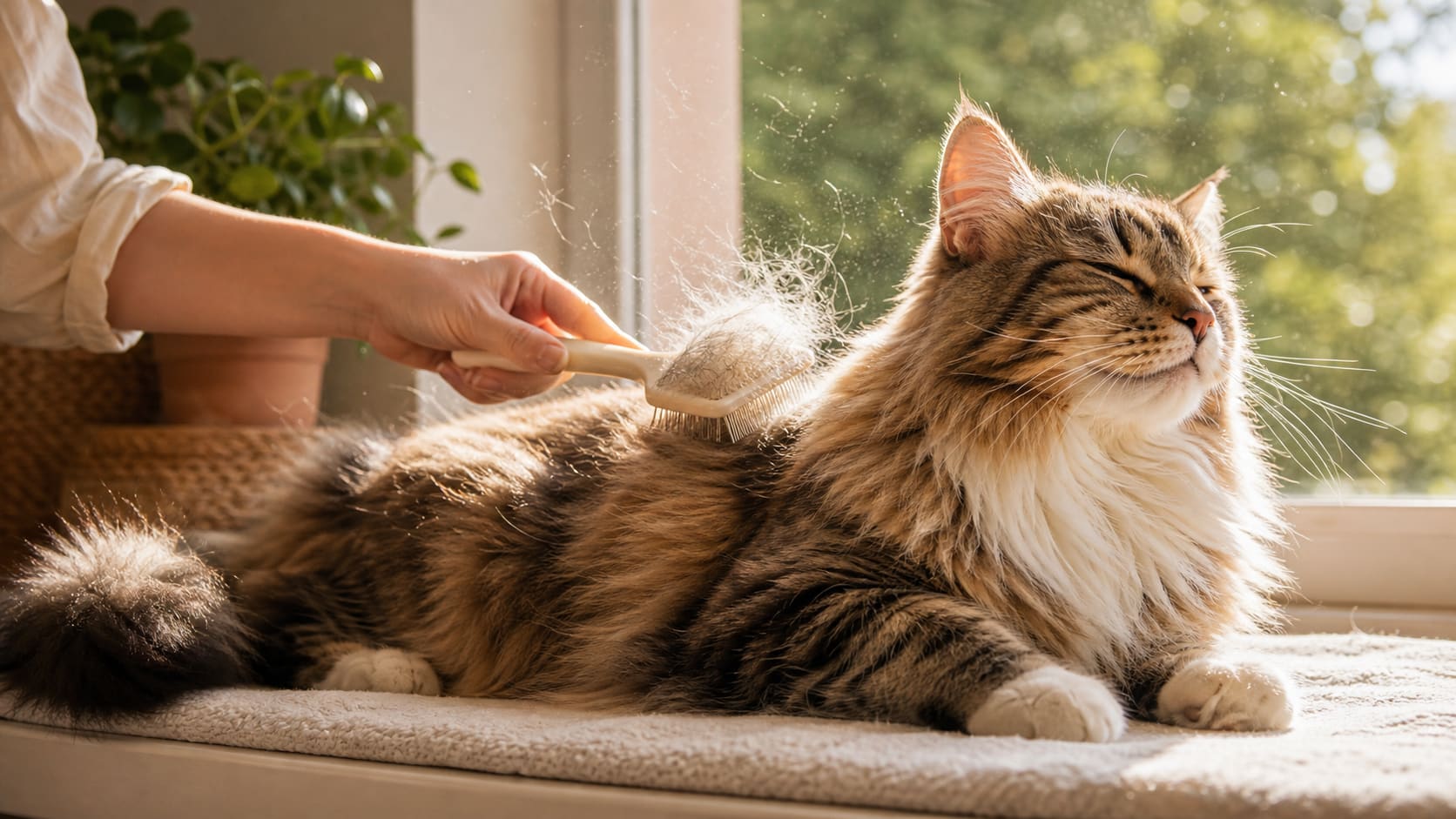
If it feels like your cat is dissolving into fur every July, you are not imagining it. Summer is peak shedding season, and a cat that looked sleek in winter can suddenly leave drifts of hair on every dark cushion in the house. The shedding itself is healthy and normal. The hairballs, the matting, and the fur on your clothes are the parts you can actually control, and it comes down to a few minutes of grooming done consistently.
Why Cats Shed More When It Gets Hot
A cat’s coat is on a seasonal clock set mostly by daylight, not temperature. As the days lengthen through spring and summer, cats shed the thick undercoat they grew for winter insulation. It is the same instinct that tells a wild cat to lighten its coat before the hot season.
Indoor cats blur this rhythm, because artificial light and climate control keep their internal calendar confused, so they shed more steadily all year. But even indoor cats usually have a noticeable summer surge. None of this is a problem on its own. The problem is what happens to all that loose hair when you do not help remove it.
The Hidden Cost of Not Brushing
When a cat sheds and you are not capturing the loose fur, it goes one of two places: into the environment, or into your cat. Cats groom by licking, which means they swallow a large share of what they shed. In summer that adds up to more hairballs, more vomiting, and occasionally a real digestive blockage.
In long-haired cats it also means matting. A mat is not just unsightly — it pulls on the skin, traps heat and moisture against the body, and can hide skin problems until they are serious. Brushing is how you intercept the fur before it becomes a hairball or a mat.
The Routine That Actually Works
You do not need a grooming station or an hour a day. You need the right tool and a steady habit.
1. Match the tool to the coat. A deshedding tool reaches the loose undercoat that a regular brush glides over. For a short-haired cat, a FURminator deShedding tool for short hair lifts out the undercoat with a few gentle passes. For a long-haired cat, the long-hair version is built to get through the topcoat without dragging. Used a couple of times a week, these remove the bulk of what your cat would otherwise swallow.
2. Go with the grain, gently. Always brush in the direction the fur lies, and lighten your pressure over bony areas and the belly. Deshedding tools work best on a dry, tangle-free coat, so for long-haired cats, work out any small knots with your fingers or a wide comb first.
3. Keep sessions short and positive. Two or three minutes, ideally when your cat is already relaxed, paired with a treat or some chin scratches. A cat that associates the brush with a pleasant wind-down will sit for it. A cat you chase and pin will fight it every time.
4. Brush more before bath-free cooling. If you damp-stroke your cat to cool them on hot days, a quick brush first means the water reaches the skin instead of sitting on a layer of dead fur.
Hydration and Diet Show Up in the Coat
A surprising amount of coat quality comes from the inside. A well-hydrated cat has healthier skin and a more resilient coat that sheds in a controlled way rather than coming out in dull clumps. This is doubly true in summer, when cats are prone to running slightly dry.
Keeping water appealing helps — a fountain nudges reluctant drinkers, and leaning on wet food adds moisture. Our guide on getting your cat to drink more water covers the rest. A diet with enough quality fat and protein rounds out a coat that holds together better through the shedding season.
Build a Small Summer Grooming Station
The easiest routine is the one you do without thinking. Keep the brush, a towel, and a gentle wipe option in one predictable spot, ideally near the place your cat already relaxes. After a short brushing session, wipe loose hair from the coat surface, paws, or rear area only if your cat tolerates it.
What helps: The ZeaCotio Pet Glove Wipes are a practical cleanup add-on because each wipe is shaped like a glove and individually wrapped. They make the most sense for quick paw, coat, face, or rear-area cleanup after brushing, litter tracking, or travel. Treat them as a convenience tool, not a treatment: wipes do not replace bathing when a cat is truly soiled, and they do not treat skin problems.
This is also a good moment to check nails. Long, sharp claws can snag bedding, scratch posts, and furniture more aggressively, especially when a shedding cat is grooming and scratching more often.
What helps: The Picky zoom 2-in-1 Nail Clippers and Grinder combines a clipper and grinder with a safety guard and LED light. Use it as a tool for careful, gradual nail maintenance, not as a promise that trimming will be painless or stress-free. If your cat panics, stop and ask a vet or groomer to show you the safe depth.
When to Stop Brushing and Call the Vet
Normal seasonal shedding is even, all over, and leaves healthy skin underneath. Book a vet visit if you see:
- Bald patches or thinning in specific spots
- Red, scabby, flaky, or irritated skin
- Constant scratching, biting, or over-grooming
- A dull, greasy, or smelly coat
- Sudden, dramatic shedding that does not match the season
These can signal allergies, fleas, stress, or a medical issue — and summer is also flea season, which is its own cause of scratching and hair loss. If fleas are on your radar, see how to get rid of fleas on cats.
Otherwise, summer shedding is just your cat doing exactly what it should. A deshedding tool and a few minutes a few times a week turns it from a household nuisance into a non-event — and keeps your cat cooler and more comfortable in the process. For the bigger picture, see how to keep your cat cool in hot weather.
We’re building CatPlay, a simple app for tracking your cat’s daily habits — including grooming and coat changes — so you can tell normal seasonal shifts from something worth a vet visit.
Sources
This article cites 3 sources in the text. They are linked below.
- Cat Grooming and Coat Care (ASPCA)
- Feline Coat and Skin Health (Cornell Feline Health Center)
- Hairballs in Cats (International Cat Care)
Common questions
Is it normal for cats to shed more in summer?
Yes. Cats shed year-round, but most ramp up in late spring and summer as daylight lengthens and they drop the dense undercoat they grew for winter. Indoor cats with artificial light shed more evenly all year, but still tend to peak in the warm months.
How often should I brush my cat in summer?
Short-haired cats do well with two or three brushings a week; long-haired cats benefit from a short daily session. A few minutes is enough. Consistency matters more than length, and daily brushing prevents the mats that build up fast in a heavy coat.
When is shedding a sign of a health problem?
See your vet if you notice bald patches, redness, scabs, excessive scratching, or a dull, greasy coat. Sudden heavy shedding with skin changes can point to allergies, parasites, stress, or an underlying medical issue rather than a normal seasonal coat change.
The Summer Cat Care Checklist
A simple checklist for heat, hydration, grooming, and open-window safety on hot days.
No spam. Unsubscribe anytime. We respect your inbox.