Why Does My Cat Stare at Me? (7 Reasons Decoded)
Sometimes your cat wants dinner. Sometimes they're reading the room. Here are 7 common reasons cats stare at their humans, and how to tell which one you're looking at.
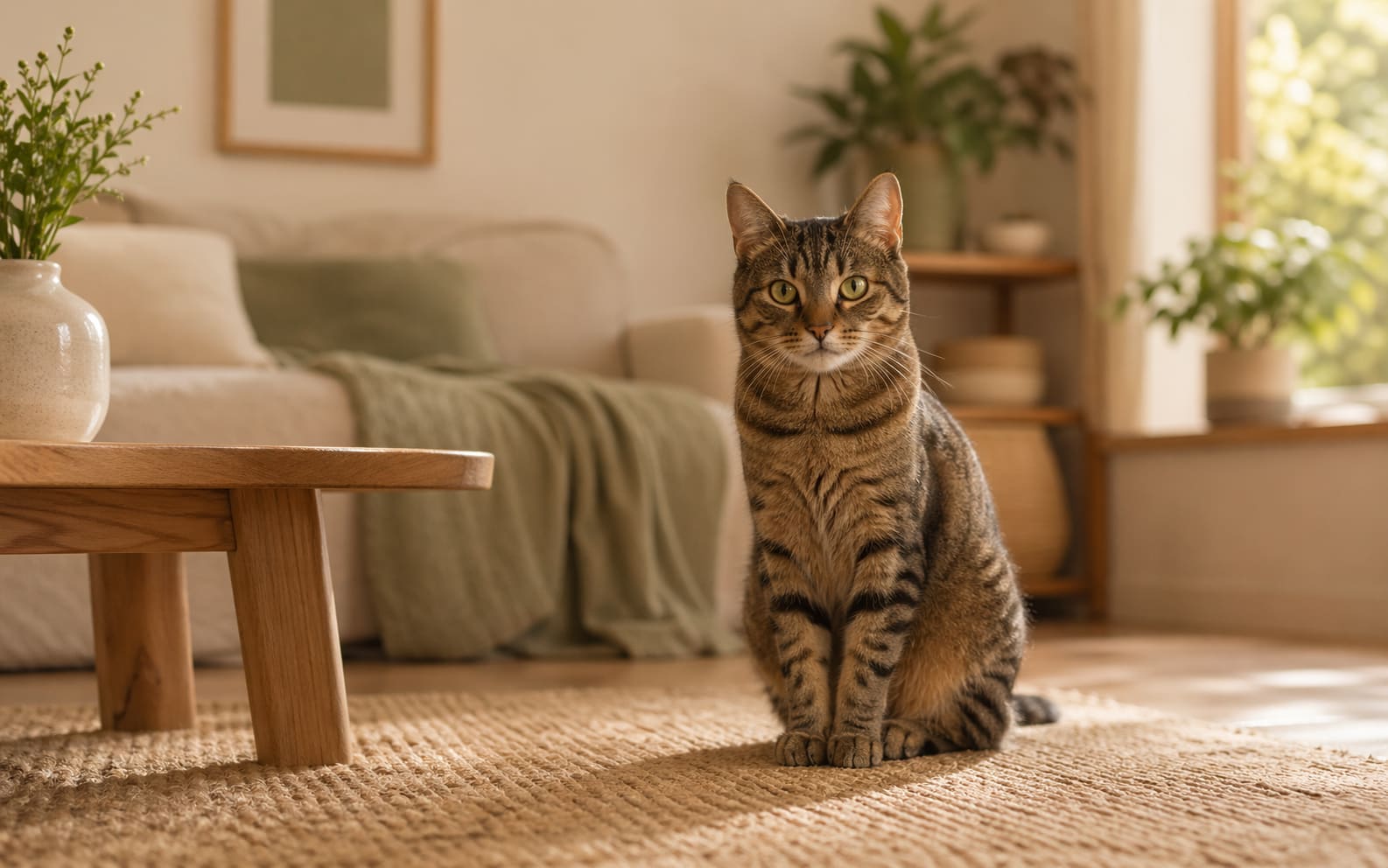
You’re on the couch, halfway through a show, and you can feel it before you even look up.
Your cat is across the room, perfectly still, staring at you like they’re trying to read your mind.
Sometimes it’s funny. Sometimes it’s slightly unsettling. And sometimes it happens so often that you start wondering if something is wrong.
Usually, it isn’t. Cats stare for specific reasons, and the trick is reading the rest of the picture around the stare: body posture, ears, tail, time of day, and what happened right before it.
Here’s what’s actually going on.
1. They’re Waiting for You to Do Something
This is the most common reason by far.
Cats are excellent students of routine. They know what it means when you walk toward the kitchen, reach for your shoes, open a cabinet, or settle into bed. If your cat is staring at you around one of those predictable moments, they’re often not being mysterious at all. They’re waiting for the next step.
A lot of “random” staring is really anticipation: dinner, treats, playtime, the window opening, the bedroom door, the blanket being lifted so they can crawl underneath it.
Your cat has linked you to an outcome and is watching for the cue that it’s about to happen.
What helps: If the stare always shows up before food or play, tighten the routine so your cat doesn’t have to keep guessing. Scheduled meals and a predictable evening play session reduce a lot of intense watchfulness. PetSafe SlimCat is a simple way to slow meals down and give that anticipatory energy a better outlet.
2. They Want Your Attention
Sometimes the stare is simply the opening move.
Unlike dogs, many cats don’t lead with obvious noise. They try eye contact first. If you’ve ever looked back, spoken to them, gotten up, or followed them after a silent stare, your cat may have learned that “lock eyes with human” is an efficient way to get results.
This is especially common in cats that also meow at dawn, hover near your desk while you work, or stare for a full minute and then walk away to make sure you’re following.
What helps: Respond on purpose, not automatically. If you want less demand behavior, initiate attention before your cat escalates to staring, meowing, or knocking things over. If the pattern is strongest at night, our guide on why your cat wakes you up at 3 AM will feel familiar. For positive attention, Go Cat Da Bird is still one of the best ways to redirect that focus into a short, satisfying play session.
3. They’re in Hunt Mode
Cats don’t only watch prey. They also watch the person who usually creates prey.
If your cat tends to stare right before a play session, before you open the closet where the wand toy lives, or while your hands are moving under a blanket, you’re probably looking at predatory focus. The body usually gives this away: pupils widen, the head lowers slightly, and the whole cat looks still in that very deliberate way that comes right before motion.
This kind of stare is common in indoor cats that need more structured play. The energy is there. It just doesn’t have a job yet.
What helps: Give that focus a better target than your ankles. A short, intense wand session is usually more effective than leaving random toys on the floor. If your cat gets into trouble when under-stimulated, see our guide to indoor cat enrichment ideas and our roundup of interactive toys that actually work. For solo chase sessions, SmartyKat Hot Pursuit does a good job of creating that hidden-prey movement pattern.
4. They’re Relaxed and Bonding With You
Not every stare is a demand. Some of them are soft.
If your cat is staring while lying down, blinking slowly, sitting loosely, or loafing near you, this is often social attention rather than pressure. Cats spend more time visually tracking the people and animals they trust. You’re part of their environment, and when they feel safe, they watch you without urgency.
The key difference is tension. A relaxed stare comes with soft eyes, neutral ears, and a calm body. It feels less like surveillance and more like companionship.
What helps: Slow blink back. It sounds ridiculous until you try it, but many cats respond immediately. If your cat likes to watch you from above, giving them a stable perch nearby often increases that calm, connected “just hanging out” behavior. A sturdy Feandrea 56.3-Inch Cat Tree works well for that.
5. They’re Curious About Something You’ve Changed
Cats notice small changes faster than most humans do.
New glasses. A phone on a tripod. A suitcase by the door. A different laundry basket. Even a shift in your body language can make your cat stare longer than usual while they decide whether this is interesting, suspicious, or irrelevant.
This kind of staring often happens with a slightly stretched neck, forward ears, and a cautious but not fearful posture. They’re gathering information - whether this new object, sound, smell, or version of you belongs in their territory.
What helps: Let them investigate on their terms. Don’t push the new thing toward them. If your cat needs more acceptable outlets for curiosity, food puzzles and batting toys can redirect that investigative energy away from your desk setup and toward something made for them. Cat Amazing Puzzle Feeder is a strong fit for cats that like to poke, forage, and problem-solve.
6. They’re Stressed or Unsure
When a cat is anxious, the eyes can go wide and fixed. The body gets stiffer. The ears may angle sideways or back. You might also see tail twitching, crouching, hiding breaks, or sudden overreactions to small noises. In that context, staring is less “what are you doing?” and more “I am not sure this situation feels safe.”
This can happen after visitors, loud construction, a new pet, a move, or even a subtle shift in household rhythm.
What helps: Lower the pressure. Keep the room quiet, make sure hiding spots and vertical escape routes are available, and avoid forcing interaction. If your cat’s stress shows up in other ways too, you may also notice behaviors like knocking things off tables or restless night waking. FELIWAY Classic Diffuser is a reasonable environmental support option for stress-related behavior.
7. Sometimes It Really Does Warrant a Vet Check
Most staring is normal. Sudden, unusual staring is different.
If your cat has started staring into space, seems hard to interrupt, is bumping into things, acting disoriented, vocalizing more than usual, or pairing the staring with appetite or mobility changes, don’t assume it’s just a quirky new habit. Vision issues, pain, high blood pressure, cognitive changes, and other medical problems can all change how a cat uses eye contact and visual attention.
Older cats especially deserve a lower threshold for getting checked out when their behavior changes abruptly.
A normal behavior that suddenly looks different should be taken seriously. If the staring is new, intense, or accompanied by other changes, book the vet visit instead of trying to solve it as a training problem first.
The Bottom Line
Most of the time, your cat is not staring because they’re angry, plotting, or trying to make you uncomfortable. They’re staring because they’re waiting, asking, focusing, bonding, or checking whether the situation feels normal.
The easiest way to decode it is to stop looking at the eyes alone. Look at the whole cat.
Soft body, slow blink, loose posture? Probably affection or calm curiosity.
Still body, big pupils, hunting tension? Probably play drive.
Fixed stare with stiff posture, flattened ears, or other behavior changes? Time to slow down and look closer.
Once you start reading the context, the stare stops feeling mysterious and starts feeling like what it usually is: communication.
Want a simpler way to keep your cat’s play routine consistent? We’re building CatPlay — a simple app for daily play habits, energy tracking, and noticing behavior patterns before they become problems.
Sources
This article cites 3 sources in the text. They are linked below.
- Setting Up the Environment for Success (FelineVMA)
- What Your Cat Needs to Feel Secure (Cat Friendly Homes)
- How Cats Learn (FelineVMA)
Common questions
Is it normal for a cat to stare at you without blinking?
Usually yes. Many cats stare because they are waiting for food, attention, play, or simply watching a trusted person. The rest of the body language matters more than the eyes alone.
When should I worry about my cat staring?
Worry more when the staring is sudden, hard to interrupt, paired with disorientation, appetite changes, mobility changes, or other new behavior shifts. That combination is worth a vet check.
What does a relaxed cat stare look like?
A relaxed stare usually comes with soft eyes, slow blinks, neutral ears, and a loose body. A tense stare is more likely to come with wide pupils, stiff posture, or tail twitching.
The Cat Behavior Decoder
A free PDF with the body language cues and behavior patterns worth noticing first.
No spam. Unsubscribe anytime. We respect your inbox.