The Complete New Kitten Checklist: Everything You Need in the First Week
A no-fluff list of what to actually buy when you bring home a new kitten, in the order you'll need it.
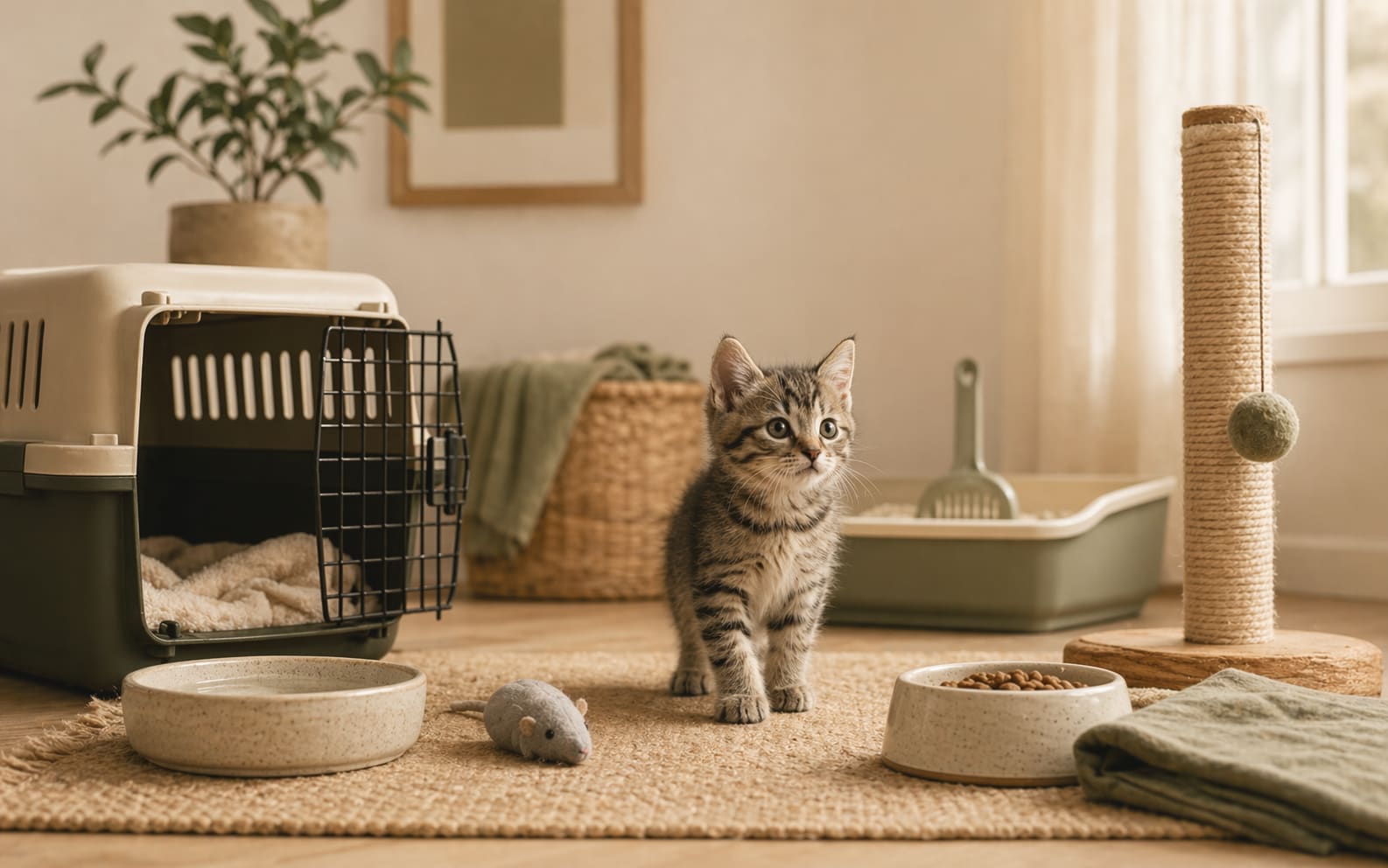
TL;DR: You need fewer things than the internet tells you, and you need them in a specific order. Litter setup first, food and water second, safe space third. Toys, beds, and cute things can wait a week. Total essentials cost: $150–$250 depending on quality choices.
Bringing home a new kitten is mostly a wonderful, slightly chaotic experience — and the chaos doubles when you realize, three hours in, that you forgot to buy a litter scoop.
This list is everything you actually need. Not what an algorithm thinks you need. Sorted by when you’ll reach for each item.
Hour 1: The arrival kit (set up before the kitten gets home)
These four things should be set up before your kitten walks through the door. Everything else can wait.
1. Litter box + litter
A single litter box for one kitten, two if you have a multi-floor home. Get one larger than you think you need — kittens grow fast, and an undersized box is the leading cause of “accidents” that aren’t really accidents.
For litter, start with unscented clumping clay in the first weeks. Kittens occasionally taste their litter, and unscented is safer. You can experiment with alternative litters (pine, paper, walnut) once they’re settled.
2. Food (the same brand the kitten was already eating)
This is the most important rule of the first week: don’t change the food. Whatever the breeder, shelter, or previous owner was feeding, get the same exact brand and formula for at least the first two weeks. Stomach upset from a sudden food change is the most common avoidable problem in the first week.
If you want to switch food later, do it gradually over 7–10 days, mixing increasing amounts of new food into the old.
3. Water bowl (or a small fountain)
A wide, shallow ceramic bowl is fine. Many cats prefer running water. If your kitten ignores the bowl, the Catit Flower Fountain is a practical starter option that’s easy to clean. Plastic bowls can cause chin acne over time and aren’t recommended.
4. A safe room
Not a thing to buy — a setup. Pick one quiet room (often a bathroom or guest room), put the litter box, food, water, and a soft hiding spot in it. Leave the kitten there for the first 24–48 hours. They’ll explore the rest of the house when ready. This single decision prevents most “scared kitten hides under the couch for a week” stories.
Day 1–3: The settling-in essentials
5. A scratching post (vertical, tall, sturdy)
Get a vertical post that’s taller than your kitten when fully stretched — for a kitten this means at least 28 inches, ideally 32+. Sisal rope is the standard surface and what most cats prefer. The SmartCat Ultimate Scratching Post is one of the few that is actually tall and stable enough to stay useful after the kitten stage.
The biggest mistake new owners make: buying a small, decorative scratching post. Cats want to scratch with their full body weight extended. A wobbly 18-inch post will be ignored, and they’ll go for your sofa instead.
6. A carrier (hard-sided, top-loading)
You’ll need this within the first two weeks for the first vet visit. Hard-sided top-loading carriers are far easier to get a reluctant cat into than soft front-loaders. The Petmate Two-Door Top-Load Carrier is a good example of the format to look for. Spend $30–50 here — it’s a 15-year purchase.
7. A simple wand toy
One wand toy with feathers or a small fabric mouse. That’s it. You don’t need a basket of toys yet — kittens will tell you what they like, and overspending here is wasted money. Go Cat Da Bird is still one of the best first toys because the movement is believable enough to trigger real chase behavior.
Week 1: The “now you can buy these” list
Once the basics are working and your kitten is eating, drinking, and using the litter box reliably, add:
- A second litter box if you have multiple floors
- A grooming brush — short-haired kittens need it weekly, long-haired daily
- Nail clippers — small scissor-style or guillotine-style, not human clippers
- A cat bed (optional — most kittens will sleep wherever they want anyway)
- A puzzle feeder for mental enrichment as they grow — the Cat Amazing Puzzle Feeder is a good first step once meals and litter habits are stable.
See our full enrichment guide →
What you don’t need yet (despite the marketing)
- Cat trees — wait until you’ve seen what kind of climber your cat is. Some prefer wall shelves, some prefer a single perch by a window.
- Treat assortments — pick one type and see if they like it before buying ten.
- Outfits and bandanas — they hate them.
- Multiple beds — they’ll sleep in a cardboard box.
- A second cat — wait at least three months before considering a companion. Most kittens need to bond with their humans first.
The total budget
For a thoughtful setup with quality basics: $150–$250.
You’ll see lists online suggesting $500+. Most of that is upselling. The list above is the honest minimum to give your kitten a healthy, comfortable first month. You can always add more later — once you’ve watched your specific cat for a few weeks and learned what they actually want.
A quiet note before you go
The single most important thing you’ll do in the first week isn’t on this list: sit on the floor and let them come to you. Quietly. Without expectation. The trust your kitten builds with you in the first two weeks shapes the next fifteen years.
The litter box matters. The toys matter. But the pace you set — calm, patient, observant — matters more than anything you can buy.
Want a printable PDF version of this checklist plus our complete cat behavior decoder? Sign up below — both are free.
Sources
This article cites 3 sources in the text. They are linked below.
- Adopting A Cat (Cat Friendly Homes)
- What Your Cat Needs to Feel Secure (Cat Friendly Homes)
- 2025 Socialization of Feral Kittens (FelineVMA)
Common questions
What do I need before bringing a new kitten home?
Start with the basics that matter in the first hours: litter setup, the same food the kitten is already eating, a water bowl or fountain, and a quiet starter room.
How much should a first week kitten setup cost?
A practical first setup often lands around 150 to 250 dollars, depending on the quality of the carrier, scratching post, and feeding gear you choose.
Should I let a new kitten roam the whole house right away?
Usually no. A quiet starter room for the first day or two helps the kitten settle in, find the litter box reliably, and build confidence before the full house opens up.
The New Kitten First Week Checklist
A starter checklist covering litter, food, carrier, setup, and the first routines that matter most.
No spam. Unsubscribe anytime. We respect your inbox.